

Tree trimming generally refers to reducing overgrowth and maintaining a tree’s shape, while tree pruning is more targeted. Pruning selectively removes dead, diseased, damaged, crossing, or poorly placed branches to improve structure, safety, and long-term health. In practice, a professional tree care visit may include both. The right approach depends on the tree species, condition, location, and your goals for the property.
Professional Tree Trimming and Pruning[email protected]2026-11-11T18:45:30+00:00


Professional Tree Trimming and Pruning
Why Your Landscape Needs Trimming and Pruning
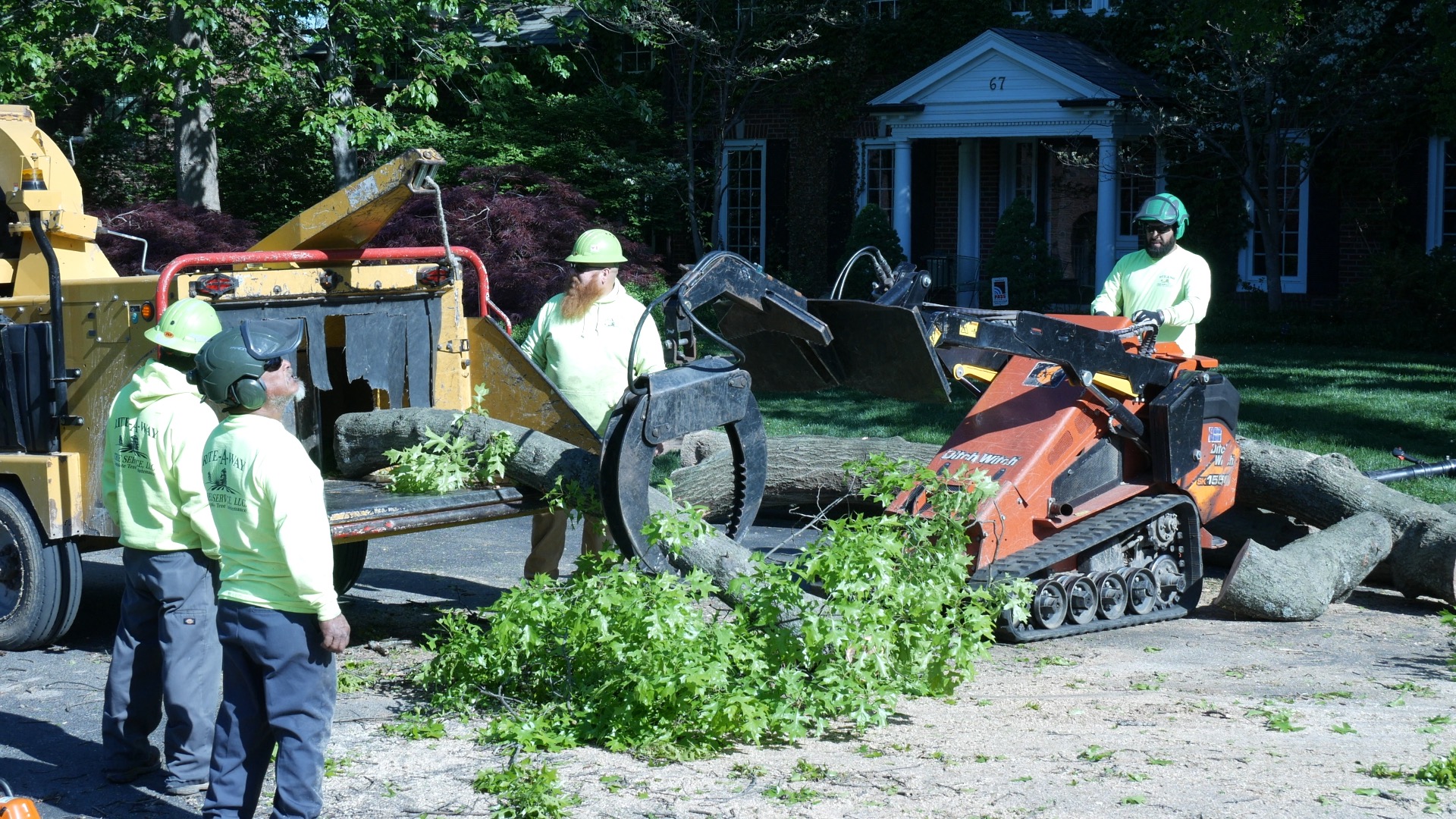
Overgrown, damaged or diseased branches can create safety and liability risks for your property. Strategic tree trimming and pruning help protect your home, vehicles and commercial assets from storm damage while promoting healthy growth. Rite-A-Way Tree Service delivers expert structural pruning through International Society of Arboriculture (ISA)-certified arborists who combine precise technique with comprehensive insurance coverage for complete peace of mind.
Professional tree trimming and pruning services help keep your property safe year-round.
- Hazard elimination: Removing dead, damaged or diseased limbs prevents them from falling during storms and causing injury or property damage. Early intervention often stops small problems from becoming expensive emergencies.
- Canopy health: Thinning dense growth allows sunlight and air to reach interior branches. This circulation reduces moisture buildup that invites fungal diseases and pest infestations.
- Clearance management: Raising lower branches creates safe clearance above homes, garages, driveways, and power lines. This proactive approach helps minimize contact damage during high winds.
- Property value protection: Healthy, well-maintained trees can support residential property value and strengthen the appearance of commercial landscapes. Regular pruning helps maintain structural integrity and prevents decline that diminishes your landscape’s worth.
The Science of Tree Pruning, From Timing to Technique
Effective tree care depends on precision in both technique and timing. Our tree trimming services are built on both principles.
Cutting too close to the trunk or leaving stubs creates entry points for destructive insects and pathogens. Our certified team cuts just beyond the branch bark collar, allowing trees to properly compartmentalize wounds and seal themselves.
We follow species-specific schedules that protect tree health. Flowering trees receive attention within three weeks after blooming to preserve next season’s display. For oaks, our team avoids trimming during the spring and early-summer oak wilt risk period whenever possible, helping reduce the chance of disease transmission.
Why Choose Us for Trimming and Pruning
The right tree care partner helps protect both your property and your investment. Here’s what sets our approach apart:
- ISA-certified botanical expertise: Our arborists apply plant biology principles to every cut, understanding how each tree species heals and responds to pruning. This way, we mitigate common mistakes that weaken trees and invite pests.
- Specialized equipment for safe, clean tree care: Our extended-reach bucket trucks and cranes allow us to access and work safely around structures, utility lines and mature plantings that ground crews cannot reach.
- Insurance protection: Full liability and workers’ compensation coverage help shield you from potential costs during tree work. Our comprehensive insurance provides an added layer of protection for property owners.
- Thorough post-service cleanup: All cut branches, wood chips and yard debris are hauled away before we leave. Your driveway, lawn and landscaping beds remain undamaged and ready to use immediately.
- Flexible payment solutions: We offer financing options that break larger pruning projects into manageable monthly payments. You can address hazardous limbs or storm-damaged trees without depleting your budget.
FAQs About Tree Trimming and Pruning in St. Louis
There is no single schedule for every tree. Young or fast-growing trees, trees near structures, and trees with developing structural problems may need more frequent attention. Mature trees may need pruning less often when they are healthy and well-structured. Local weather, species, recent storms, and the tree’s location all matter. A certified arborist can evaluate your trees and recommend a preventative schedule instead of waiting for a hazardous branch or visible decline.
Professional tree trimming services can remove hazardous or damaged branches, improve clearance from roofs and walkways, support healthier structure, and help maintain the appearance of your property. Careful pruning also reduces the chance of making cuts that weaken a tree or create openings for pests and disease. Rite-A-Way’s team can recommend the appropriate work based on the tree’s condition rather than trimming every tree the same way.
The best timing depends on the tree species, the reason for pruning, and the urgency of the work. Routine structural pruning is often easier to plan during dormant periods, but hazardous, damaged, or storm-affected branches may need attention sooner. Some trees and diseases also have seasonal considerations. A professional assessment can account for local St. Louis conditions and identify what should be handled now versus scheduled for a better seasonal window.
Proper pruning can reduce some risks by removing dead, weak, crossing, or poorly attached branches and improving a tree’s structure over time. It cannot guarantee that a tree will withstand every St. Louis storm, especially when wind, saturated soil, lightning, or other severe conditions are involved. A certified arborist can identify defects and recommend pruning, cabling, monitoring, or removal based on the specific risk.
Tree pruning costs vary based on the tree’s size, height, species, condition, number of trees, access, proximity to structures or utility lines, equipment needs, and cleanup. A simple ornamental-tree trim will usually involve different requirements than structural pruning on a large mature tree. Rite-A-Way can evaluate the property and provide a clear project-specific estimate. Financing options may also be available for qualifying larger projects.
Yes. Clearance pruning can reduce contact with roofs, driveways, walkways, and other structures when the work is appropriate for the tree. Branches near utility lines require special caution and should not be handled as a do-it-yourself project. Rite-A-Way can assess the clearance issue, explain the safest approach, and coordinate the recommended work while accounting for the tree’s health and structure.
Improper trimming includes removing too much live growth, making indiscriminate cuts, topping a tree, leaving stubs, or cutting without considering the tree’s structure and biology. These practices can weaken branches, encourage rapid weak growth, increase stress, and create entry points for decay or pests. Professional pruning focuses on selective cuts and a clear objective, helping protect the tree while addressing safety, clearance, or appearance concerns.
Dead branches should be evaluated because they can become unpredictable hazards, particularly above roofs, driveways, play areas, parking lots, and walkways. The urgency depends on the branch’s size, location, attachment, and likelihood of striking people or property. A professional can also check whether the branch is part of a larger structural or health issue. Do not climb or cut hazardous branches yourself; keep people clear until the risk is assessed.
A professional appointment typically starts with an assessment of the tree and the surrounding property. Rite-A-Way can review the requested goals, identify hazards, explain the recommended cuts, and provide an estimate before work begins. On service day, the crew uses appropriate equipment and safety practices, protects the work area, removes or handles debris as agreed, and leaves the site orderly. Follow-up recommendations may be provided when ongoing care is useful.
Secure Your Service Today
Since 1974, we’ve delivered safe, reliable tree care to properties in St. Louis and St. Charles. Our professionals provide meticulous service with flexible financing options for extensive residential or commercial projects. Call (314) 310-3978 or fill out our online form to request your consultation with a certified arborist.
